
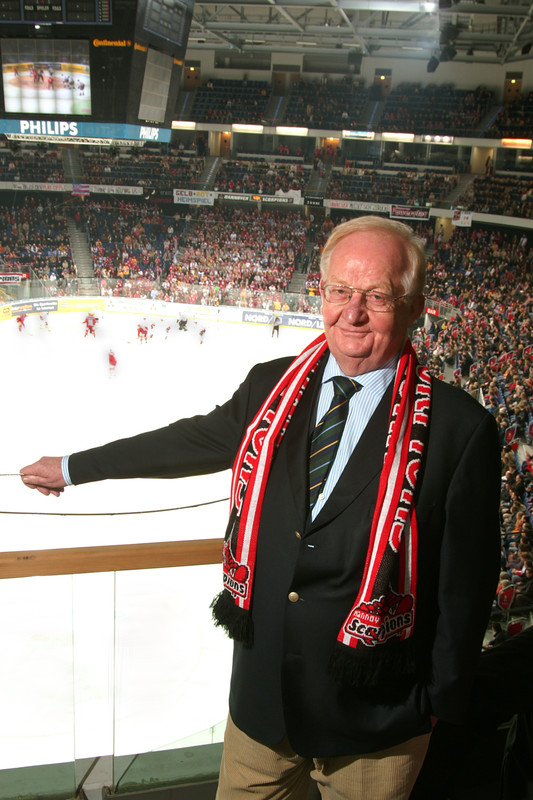
Joachim Giesel, Porträt Günter Papenburg (aus der Serie 100 Hannoversche Köpfe), Hannover, 2006.
Text zitiert aus: Bettina Zinter: Günter Papenburg, in: Joachim Giesel, Anne Weber-Ploemacher und Tino Zeyen (Hg.): 100 Hannoversche Köpfe, Hameln, 2006, S. 152.
„Mit einem gebrauchten Krupp-Lastwagen und einer Hanomag-Planierraupe fing alles an. 1963 machte sich Günter Papenburg mit diesen alten Kisten selbstständig. Später kaufte er nie mehr Gebrauchtes. Das wurde sein Prinzip. „Ich wollte immer nur das Modernste haben. Na ja“, schränkt er lachend ein, „aus zweiter Hand habe ich doch gekauft. Aber das waren dann nur noch Firmen.“ Er hat es auf insgesamt zwanzig gebracht, die er unter dem Dach einer Holding, der Günter Papenburg AG, vereint hat. 3.000 Mitarbeiter erzielen jährlich 500 Millionen Euro Umsatz. Ob Wohn- und Bürogebäude, Kreisstraßen und Autobahnen, ICE-Hochgeschwindigkeitstrassen und Brücken oder Industrie- und Messehallen – „Bauen ist unser Metier“ sagt der Chef, und man sieht die optischen Highlights vor sich: in Hannover die Niedrigenergiehäuser im Stadtteil Kronsberg, einem Weltausstellungs-Projekt, die Messehalle 26 mit ihrem charakteristischen Schleppdach, die TUI-Arena oder in Hamburg das Verwaltungsgebäude der Vereins- und Westbank. Nach der Schule hatte er beim Vater gearbeitet, der eine kleine Kiesgrube in Schwarmstedt bei Hannover besaß. Doch der hielt am Eingefahrenen fest. Der Sohn wollte mehr. Die Trennung war richtig. Aber eine Lehre war sie ihm auch. „Bei meinen Kindern wollte ich es anders machen“, sagt Günther Papenburg. Er hat sie gefördert und gefordert, alle drei haben ein Studium absolviert. Sohn Klaus und die Töchter Angela und Karin arbeiten heute im Unternehmen in verantwortlichen Positionen. Bei solch glücklicher Konstellation blickt der Vater optimistisch in Zukunft. Die Papenburg-Gruppe wird weiter wachsen. In Russland will sie investieren, in Serbien, in Afghanistan. Im Kosovo, Albanien und Kasachstan ist man schon aktiv. „Ich bin der Vorreiter“, sagt Papenburg, „ich übernehme immer die ersten Schritte. Ich will immer neue Dinge anpacken.“
„Es war ein kurzweiliger Weg“, meint er. Manchmal staunt er noch selbst darüber, wie er die Meilensteine gesetzt hat. „Ich habe nie geplant, immer spontan gehandelt und keine Entscheidung bereut.“ Zugute kam ihm, dass er ein phänomenales Zahlengedächtnis hat. Schon in der Schule hatte er im Rechnen immer eine Eins: „Ich denke in Zahlen. Wenn die Bilanz stimmte, kaufte er ein Kieswerk, erwarb er eine Straßenbaufirma, beteiligte sich an dem hannoverschen Traditionsunternehmen Hanomag. Der Fall der Mauer war einschneidend. Papenburg sah das Potential, die riesigen Aufgaben, die unternehmerische Herausforderung. Und manchmal half auch der Zufall. 1990 lernte er auf einem Empfang einen Hallenser Kombinatsdirektor kennen. Der lud ihn ein, an die Saale zu kommen. Die beiden Männer verstanden sich und kooperierten. Zunächst stellte Papenburg LKWs zur Verfügung, siedelte sich dann richtig an. Von hundert größten ostdeutschen Unternehmen steht die Papenburg AG inzwischen auf Position 50.
Oft wird er als „Baulöwe“ oder „Bautycoon“ apostrophiert, da schwingt manchmal etwas Feindseliges mit, prügeln auch schon mal die Medien auf ihn ein, wenn es nicht läuft. Die Medien braucht er nicht, wohl aber die Politiker. Die will er von seinen Ideen überzeugen. Mit Exkanzler Schröder hat er sich gut verstanden. „Ich schätze gerade in der Politik Verlässlichkeit und Offenheit. Damit erreicht man am schnellsten ein Ziel.“ In seiner Firmenphilosophie steht der Mensch ganz oben. „Es gibt in Deutschland heute kein zweites Unternehmen, das mit solch moderner Technik arbeitet wie wir. Doch unsere Leistungen sind so gut, wie die Menschen, die sie erbringen.“
Das große Projekt „Weltausstellung“ – die EXPO 2000 – hat ihn fasziniert. Deshalb finanzierte er die „Arena“ mit. Als alle das Handtuch warfen, trug er das Risiko allein. Er machte die TUI-Arena zu Niedersachsens erster Adresse für Großveranstaltungen. Oper, Rock, Sport – die Stars dieser Welt gastieren seit dem in Hannover. 2001 fanden hier die Eishockeyweltmeisterschaften statt. Papenburg, der früher selbst Fußball gespielt hat und ein Fan von Hannover 96 ist, kümmert sich jedoch vor allem um seine Hannover Scorpions. Die Eishockeymannschaft, deren Clubchef er ist, hat Höhen und Tiefen hinter sich. Viel Geld aus der eigenen Tasche fließt in den Club. Doch Günter Papenburg ist überzeugt. Eishockey ist der Zukunftssport für Deutschland. „Wenn die Jungs hinter dem Puck über das Eis fegen – kein anderes Mannschaftsspiel ist so spannend.“ Schon denkt er weiter. Ein Wettkampf der Sumo-Ringer oder ein Sechs-Tage-Rennen während der großen Messen. Das wär’s doch.“